Today’s consumers no longer separate “mobile” from “desktop” or “digital” from “physical.” For them, a brand is a single, unified experience. They might discover a product through an Instagram ad, research it on a laptop, visit a store to try it, and then open an app to finalize the purchase. In short, the traditional, linear customer journey no longer exists.
Yet, for many companies, marketing operations are still fragmented. The mobile marketing team celebrates installs, the CRM team measures open rates, and the web team tracks traffic. The result? A disjointed customer experience and an inflated Customer Acquisition Cost (CAC).
If you’ve already recognized the importance of omnichannel integration and want to synchronize your mobile marketing in a true 360° approach—this guide is for you.
How to Integrate Omnichannel and Mobile Marketing
A successful omnichannel strategy goes far beyond cross-promotion. It’s about integrating data, technology, and strategy to deliver consistent and relevant experiences across every customer touchpoint. Below are three foundational steps for building this bridge.
1. Create a Unified Data Ecosystem
Omnichannel success begins with data integration. Your CRM (e.g., HubSpot, Salesforce), Mobile Measurement Partner (AppsFlyer, Adjust), and e-commerce platforms (Shopify, VTEX) must communicate seamlessly.
When data remains siloed, you’re only executing multichannel marketing—multiple touchpoints without synchronization. True omnichannel marketing, on the other hand, means consolidating these systems into a single source of truth where every user interaction contributes to a holistic understanding of your audience.
2. Position the App as the Central Touchpoint
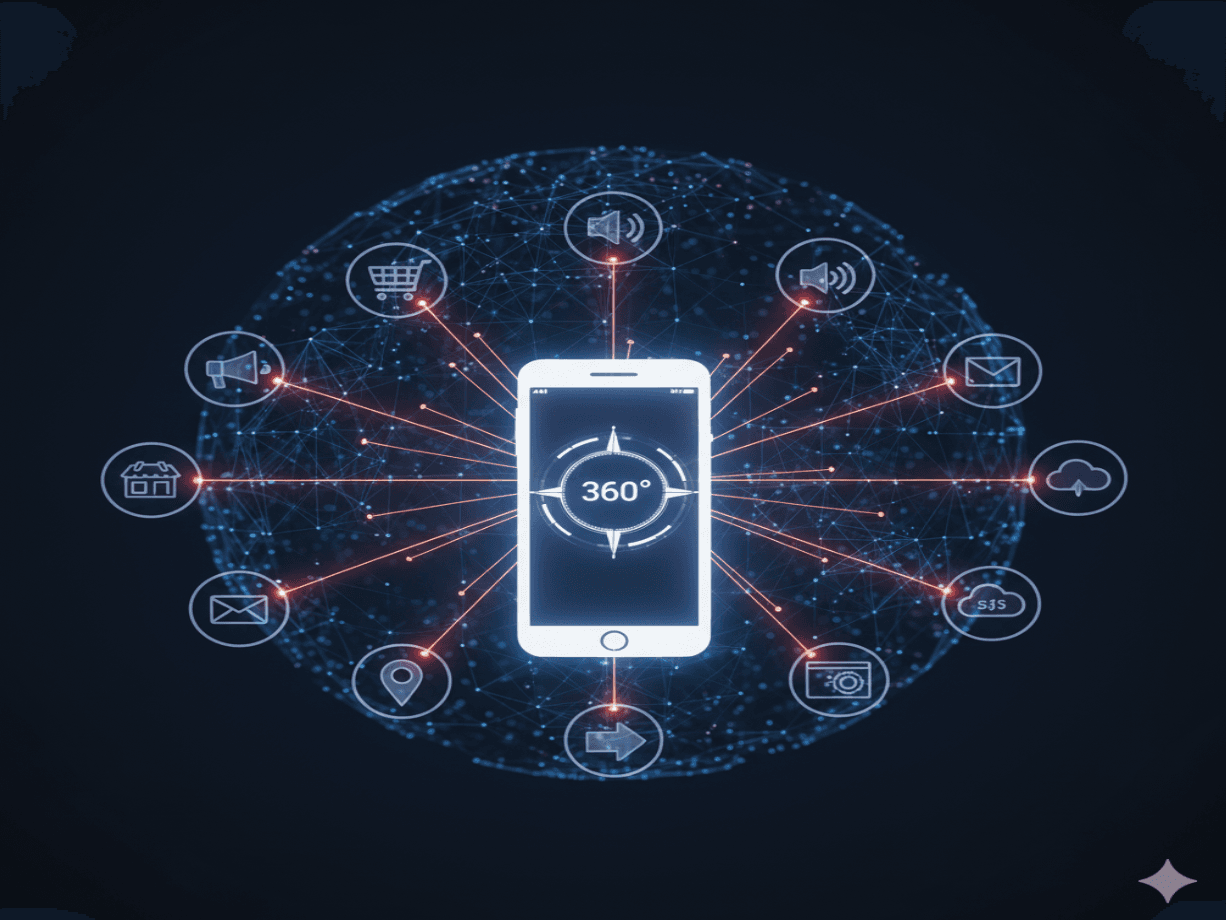
In an omnichannel ecosystem, your mobile app should be the data and engagement hub. It’s where the richest insights live—behavioral patterns, location data (with consent), engagement history, and transactions.
By positioning the app at the center, marketers can better personalize communication, enrich user profiles, and connect app insights with other channels such as email, web, or paid media.
3. Use Deep Linking for Seamless Experiences
Deep linking is the technology that ties your channels together. It ensures that when a user clicks a product link in an email or social ad, they’re taken directly to the relevant in-app page—rather than a mobile website.
This eliminates friction, creates continuity across channels, and boosts both engagement and conversion rates.
How Omnichannel Marketing Strengthens App Growth
App marketing strategies often focus on driving installs. Omnichannel strategies ensure that once users download your app, they stay engaged and continue converting. Here’s how:
1. Smarter Churn Reduction and Re-engagement
The most common signal of churn is inactivity. In isolated setups, the only reactivation tool is push notifications—often ignored or disabled.
Omnichannel models solve this by connecting engagement data with other channels. For example:
- After 10 days of inactivity, send a personalized email.
- Follow it with an SMS offer or a remarketing ad on social media.
This interconnected system keeps your brand visible across channels and boosts user retention.
2. Optimized Customer Acquisition Cost (CAC)
App install campaigns can be costly. Omnichannel marketing reduces CAC by using organic and cost-effective entry points.
Example: A user discovers your content through SEO or social media, joins your newsletter, and only later sees an app download prompt (Web-to-App strategy). By nurturing the relationship first, acquisition costs drop while conversion quality improves.
3. Increased Purchase Frequency and Lifetime Value (LTV)
Omnichannel synergy keeps your brand top of mind. For instance, a user who ignores a push notification might later see a retargeting ad on desktop during work hours. The more touchpoints your brand has across channels, the more opportunities you have to re-engage and increase purchase frequency—ultimately boosting LTV.
Four Omnichannel Strategies for App Marketers
To truly execute a 360° vision, mobile marketing teams should lead initiatives that connect app insights with every other channel. Below are four practical strategies to get started:
1. Smart Banners and Web-to-App Migration
Implement smart banners on your website that recognize whether a user has the app installed.
- If not installed → CTA: “Download the App” → directs to App Store or Play Store.
- If installed → CTA: “Open in App” → deep links directly to the viewed product or content.
This frictionless experience not only increases conversions but also strengthens the connection between your web and app audiences.
2. Cross-Platform Cart Recovery
Synchronize shopping carts between web and app platforms using a unified customer ID.
When a logged-in user abandons a cart on desktop, the CRM registers this behavior. Instead of relying solely on email follow-ups, trigger a push notification 30 minutes later (if the user has the app). This approach uses the most immediate and attention-grabbing channel to recover high-intent users.
3. Cross-Channel Reactivation Workflows
Never consider an inactive app user “lost.” Set up automation that identifies users who haven’t opened the app for 30 days.
If push notifications are disabled, the system should automatically trigger other channels—like email campaigns, SMS reminders, or programmatic remarketing ads. This coordinated approach increases the likelihood of reactivation while maintaining a consistent user experience.
4. Intelligent Data Sync and Attribution
Use your MMP or analytics platform to connect attribution data across all channels—mobile, desktop, and in-store. This enables a unified view of customer behavior, helping teams allocate budgets more efficiently and understand which touchpoints truly drive conversions.
Final Thoughts: Building True 360° Mobile Marketing
Executing omnichannel strategies is not just about technology—it’s about alignment. Teams must collaborate around shared KPIs, unified data, and a common understanding of the user journey.
Data fragmentation remains the biggest barrier to achieving a complete 360° view. Overcoming this requires not only the right tech stack but also strategic partnerships that can connect insights, tools, and teams into one cohesive ecosystem.
In an increasingly mobile-first world, your app is the heartbeat of your brand’s omnichannel experience. By building a connected strategy that synchronizes mobile with every other touchpoint, you’ll deliver seamless user experiences, stronger engagement, and higher ROI.