Posts,
Thoughts A Latest News
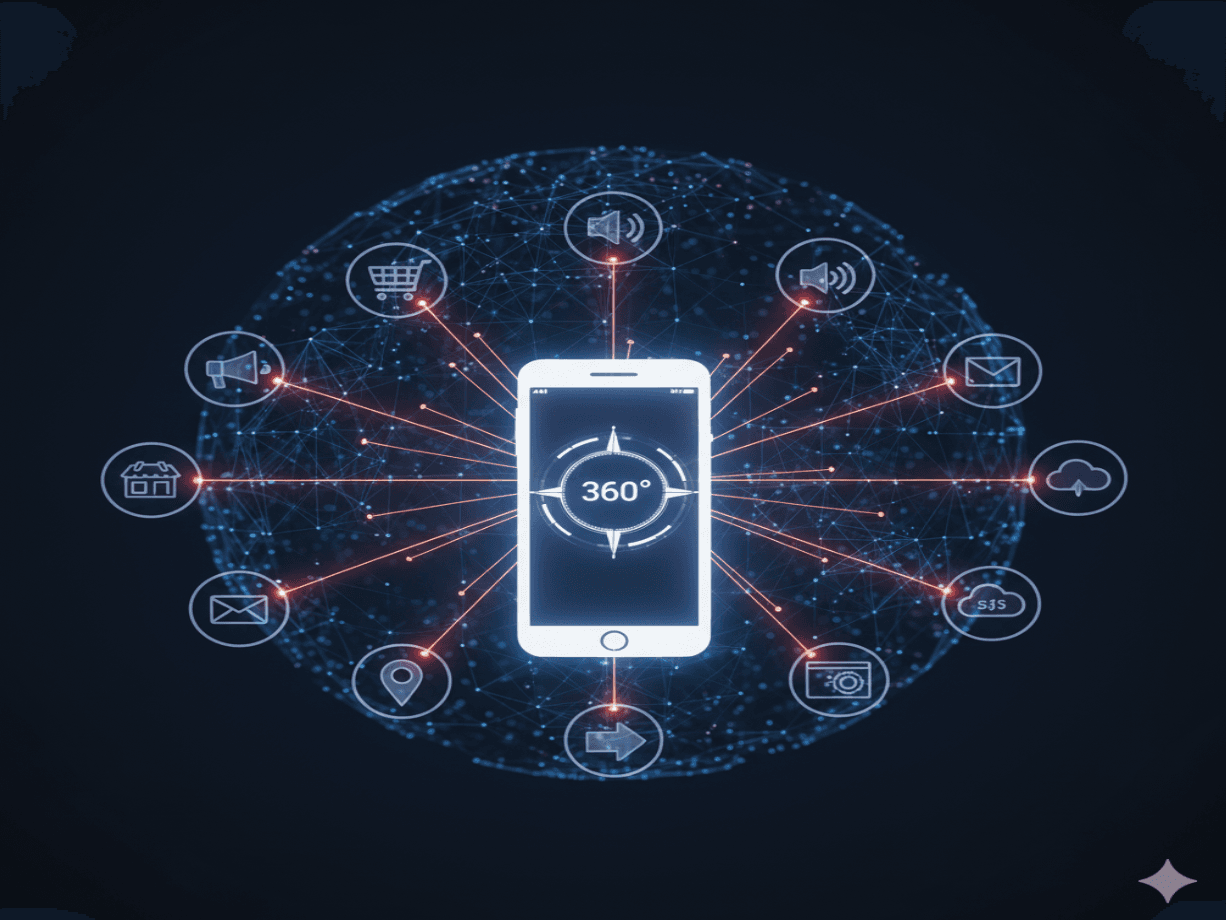
Omnichannel Strategies for Apps: Building a 360° Mobile Marketing Approach
Today’s consumers no longer separate “mobile” from “desktop” or “digital” from “physical.” For them, a brand is a single, unified experience. They might discover a product through an Instagram ad, research it on a laptop, visit a store to try it, and then open an app to finalize the purchase. In short, the traditional, linear customer journey no longer exists.
Yet, for many companies, marketing operations are still fragmented. The mobile marketing team celebrates installs, the CRM team measures open rates, and the web team tracks traffic. The result? A disjointed customer experience and an inflated Customer Acquisition Cost (CAC).
If you’ve already recognized the importance of omnichannel integration and want to synchronize your mobile marketing in a true 360° approach—this guide is for you.
How to Integrate Omnichannel and Mobile Marketing
A successful omnichannel strategy goes far beyond cross-promotion. It’s about integrating data, technology, and strategy to deliver consistent and relevant experiences across every customer touchpoint. Below are three foundational steps for building this bridge.
1. Create a Unified Data Ecosystem
Omnichannel success begins with data integration. Your CRM (e.g., HubSpot, Salesforce), Mobile Measurement Partner (AppsFlyer, Adjust), and e-commerce platforms (Shopify, VTEX) must communicate seamlessly.
When data remains siloed, you’re only executing multichannel marketing—multiple touchpoints without synchronization. True omnichannel marketing, on the other hand, means consolidating these systems into a single source of truth where every user interaction contributes to a holistic understanding of your audience.
2. Position the App as the Central Touchpoint
In an omnichannel ecosystem, your mobile app should be the data and engagement hub. It’s where the richest insights live—behavioral patterns, location data (with consent), engagement history, and transactions.
By positioning the app at the center, marketers can better personalize communication, enrich user profiles, and connect app insights with other channels such as email, web, or paid media.
3. Use Deep Linking for Seamless Experiences
Deep linking is the technology that ties your channels together. It ensures that when a user clicks a product link in an email or social ad, they’re taken directly to the relevant in-app page—rather than a mobile website.
This eliminates friction, creates continuity across channels, and boosts both engagement and conversion rates.
How Omnichannel Marketing Strengthens App Growth
App marketing strategies often focus on driving installs. Omnichannel strategies ensure that once users download your app, they stay engaged and continue converting. Here’s how:
1. Smarter Churn Reduction and Re-engagement
The most common signal of churn is inactivity. In isolated setups, the only reactivation tool is push notifications—often ignored or disabled.
Omnichannel models solve this by connecting engagement data with other channels. For example:
- After 10 days of inactivity, send a personalized email.
- Follow it with an SMS offer or a remarketing ad on social media.
This interconnected system keeps your brand visible across channels and boosts user retention.
2. Optimized Customer Acquisition Cost (CAC)
App install campaigns can be costly. Omnichannel marketing reduces CAC by using organic and cost-effective entry points.
Example: A user discovers your content through SEO or social media, joins your newsletter, and only later sees an app download prompt (Web-to-App strategy). By nurturing the relationship first, acquisition costs drop while conversion quality improves.
3. Increased Purchase Frequency and Lifetime Value (LTV)
Omnichannel synergy keeps your brand top of mind. For instance, a user who ignores a push notification might later see a retargeting ad on desktop during work hours. The more touchpoints your brand has across channels, the more opportunities you have to re-engage and increase purchase frequency—ultimately boosting LTV.
Four Omnichannel Strategies for App Marketers
To truly execute a 360° vision, mobile marketing teams should lead initiatives that connect app insights with every other channel. Below are four practical strategies to get started:
1. Smart Banners and Web-to-App Migration
Implement smart banners on your website that recognize whether a user has the app installed.
- If not installed → CTA: “Download the App” → directs to App Store or Play Store.
- If installed → CTA: “Open in App” → deep links directly to the viewed product or content.
This frictionless experience not only increases conversions but also strengthens the connection between your web and app audiences.
2. Cross-Platform Cart Recovery
Synchronize shopping carts between web and app platforms using a unified customer ID.
When a logged-in user abandons a cart on desktop, the CRM registers this behavior. Instead of relying solely on email follow-ups, trigger a push notification 30 minutes later (if the user has the app). This approach uses the most immediate and attention-grabbing channel to recover high-intent users.
3. Cross-Channel Reactivation Workflows
Never consider an inactive app user “lost.” Set up automation that identifies users who haven’t opened the app for 30 days.
If push notifications are disabled, the system should automatically trigger other channels—like email campaigns, SMS reminders, or programmatic remarketing ads. This coordinated approach increases the likelihood of reactivation while maintaining a consistent user experience.
4. Intelligent Data Sync and Attribution
Use your MMP or analytics platform to connect attribution data across all channels—mobile, desktop, and in-store. This enables a unified view of customer behavior, helping teams allocate budgets more efficiently and understand which touchpoints truly drive conversions.
Final Thoughts: Building True 360° Mobile Marketing
Executing omnichannel strategies is not just about technology—it’s about alignment. Teams must collaborate around shared KPIs, unified data, and a common understanding of the user journey.
Data fragmentation remains the biggest barrier to achieving a complete 360° view. Overcoming this requires not only the right tech stack but also strategic partnerships that can connect insights, tools, and teams into one cohesive ecosystem.
In an increasingly mobile-first world, your app is the heartbeat of your brand’s omnichannel experience. By building a connected strategy that synchronizes mobile with every other touchpoint, you’ll deliver seamless user experiences, stronger engagement, and higher ROI.
The Great App Rush 2026: How Mobile Market Penetration is Powering the Next Wave of Digital Growth
The mobile world isn’t expanding — it’s evolving faster than ever. By 2026, global smartphone users are expected to cross 7.8 billion, with app installs skyrocketing across fintech, iGaming, and lifestyle categories. But here’s the truth: while downloads are rising, true penetration — owning a meaningful share of your user’s time and wallet — is what defines success in the next phase of mobile marketing.
★ 2026: The Year of Smart Penetration
The rules of the game have changed. App marketers in 2026 aren’t just measuring downloads — they’re mastering penetration efficiency. That means deeper market intelligence, event-based optimization, and precise user segmentation powered by AI.
Your goal isn’t to reach “everyone.” It’s to convert the right ones, faster. In mature markets like the U.S. and Western Europe, it’s about retention and personalization. In emerging markets like Brazil, India, and MENA — it’s about fast scaling through OEM and CTV integrations.
★ OEM Partnerships: The Invisible Growth Engine of 2026
Original Equipment Manufacturers (OEMs) are no longer just phone brands — they’ve become marketing ecosystems. Pre-installed apps, native placements, and first-screen widgets now allow brands to reach users even before they open the Play Store.
Marketers using OEM channels report up to 35% lower CPI and 2x better retention rates compared to traditional paid UA. OEM marketing in 2026 isn’t an alternative channel — it’s the new default growth engine.
★ CTV + Programmatic: Where Screens Meet Strategy
Connected TV (CTV) is now the bridge between brand awareness and user acquisition. By 2026, over 1 billion users will engage with CTV platforms globally, and programmatic technology will make it possible to retarget those same viewers directly on mobile devices.
Imagine this: a user sees your fintech ad on Roku — and within 24 hours, installs your app after seeing a dynamic offer on Instagram. That’s not a coincidence. That’s cross-device intelligence in motion.
★ iGaming, Fintech & E-Commerce: The Penetration Powerhouses of 2026
Some categories aren’t just growing — they’re dominating. In 2026, iGaming, fintech, and ecommerce apps are leading market penetration metrics across multiple geographies.
- iGaming apps are using real-time behavioral segmentation to identify high-value players.
- Fintech brands are running AI-powered LTV predictions to refine acquisition spend.
- Ecommerce apps are leveraging OEM placements and influencer storytelling to convert impulse into action.
These verticals aren’t just acquiring users — they’re creating sticky ecosystems.
★ Local Wins Big: The Localization Imperative of 2026
The days of one-size-fits-all campaigns are over. Penetration success in 2026 depends on how well you understand your market. Hyper-local strategies are outperforming generic global ones:
- In the Middle East, Ramadan-tailored campaigns are driving 45% higher install rates.
- In LATAM, local humor and celebrity endorsements outperform standard visuals.
- In India, vernacular creatives are seeing 3x engagement compared to English ads.
Localization isn’t a tactic — it’s the foundation of global scalability.
★ Predictive Growth: AI Takes Over in 2026
Artificial intelligence has officially stepped into the driver’s seat. With predictive analytics, marketers can now identify who will install, engage, or churn — before launching a campaign.
Dynamic bidding, value-based pricing, and real-time audience modeling are helping advertisers minimize waste and maximize reach. In short: 2026 is the year of predict-before-you-promote.
★ Final Takeaway: The 2026 App Growth Mindset
The era of random installs is over. In 2026, mobile market penetration is about influence, intelligence, and integration.
The winners of this new phase won’t be those who shout the loudest — but those who:
- Build strong OEM & CTV ecosystems
- Harness predictive data for smarter bidding
- Localize deeply to connect emotionally
- And turn downloads into daily habits
Because in the app world of 2026, penetration isn’t about being visible — it’s about being indispensable.
The Mobile iGaming Revolution: Inside the App-First Future of 2026
The iGaming industry is entering a high-stakes transformation and this time, it’s happening entirely inside the app. As we move into 2026, mobile-first is no longer just a strategy. It's the heartbeat of user acquisition, engagement, and monetization. From AI-driven retention to real-time event optimization, the future of iGaming will belong to those who know how to turn installs into loyal, high-value players.
1. App-First Growth Becomes the New Baseline
Forget the desktop. Forget even the mobile web. In 2026, iGaming brands are being built inside apps where attention, personalization, and data meet. Marketers are prioritizing native ad formats, in-app rewards, and gameplay-driven engagement loops to reduce churn and increase session depth.
Top DSPs are already optimizing for post-install events — not just CPI. Because in iGaming, quality installs matter more than quantity.
“The new gold metric isn’t the install — it’s the repeat deposit.”
2. AI-Powered Player Journeys
AI is no longer a buzzword; it’s a player whisperer. In 2026, top iGaming apps will use predictive AI to identify player intent, detecting when a user is likely to deposit, churn, or upgrade.
Machine learning models will personalize bonuses, notifications, and in-app offers based on behavior patterns. This means fewer generic messages and more timely, meaningful engagement that keeps players in the game.
3. Event-Based Optimization is the New Performance Standard
The smartest advertisers are shifting away from broad install targeting toward deep event optimization. Metrics like FTD (First-Time Deposit), ARPU, and retention rate now drive every bid, every creative, every A/B test.
By focusing on event-based costing, iGaming marketers ensure that every dollar spent translates to measurable in-app value — not empty installs.
4. CTV + Mobile Apps: A Full-Funnel Power Duo
2026 will be the year mobile and Connected TV (CTV) join forces. Imagine a user watching a sports match on CTV and within seconds, seeing an in-app offer to place a live bet or claim a free spin on their mobile. That’s cross-device storytelling at its finest.
With CTV’s contextual targeting and mobile’s conversion precision, brands can now build holistic performance funnels that capture intent wherever it happens — on the big screen or in the palm of your hand.
5. OEM Growth & App Store Diversification
As competition in Google Play and the App Store heats up, iGaming advertisers are unlocking new acquisition streams through OEM channels and alternative app stores.
Pre-installs, dynamic placements, and AI-curated recommendations on devices from Samsung, Xiaomi, and Oppo are driving higher-quality, long-term users — often at a lower cost than traditional programmatic channels.
OEM traffic isn’t just an add-on; in 2026, it will become a must-have growth layer for serious app marketers.
6. Privacy, Compliance & Smart Data
The privacy shift continues to reshape mobile performance. Apple’s ATT and Android’s Privacy Sandbox will push iGaming advertisers toward first-party data strategies — combining CRM, event-level insights, and predictive analytics to maintain scale without losing precision.
The brands that will thrive in 2026 are the ones who treat compliance as a competitive advantage — not a constraint.
★ Final Thought
2026 isn’t about being in the right market — it's about being in the right moment. And those moments happen on mobile.
To win in this new era, iGaming marketers must:
- • Think app-first, not channel-first
- • Optimize for events — not installs
- • Blend CTV with in-app engagement
- • Embrace OEM and alternative app ecosystems
- • Use AI to understand, not just target players
The next wave of iGaming growth won’t come from the web — it will come from the apps that predict, engage, and retain players at scale.
The future of iGaming isn’t arriving — it's already loading. 2026 is when mobile becomes the only arena that matters.
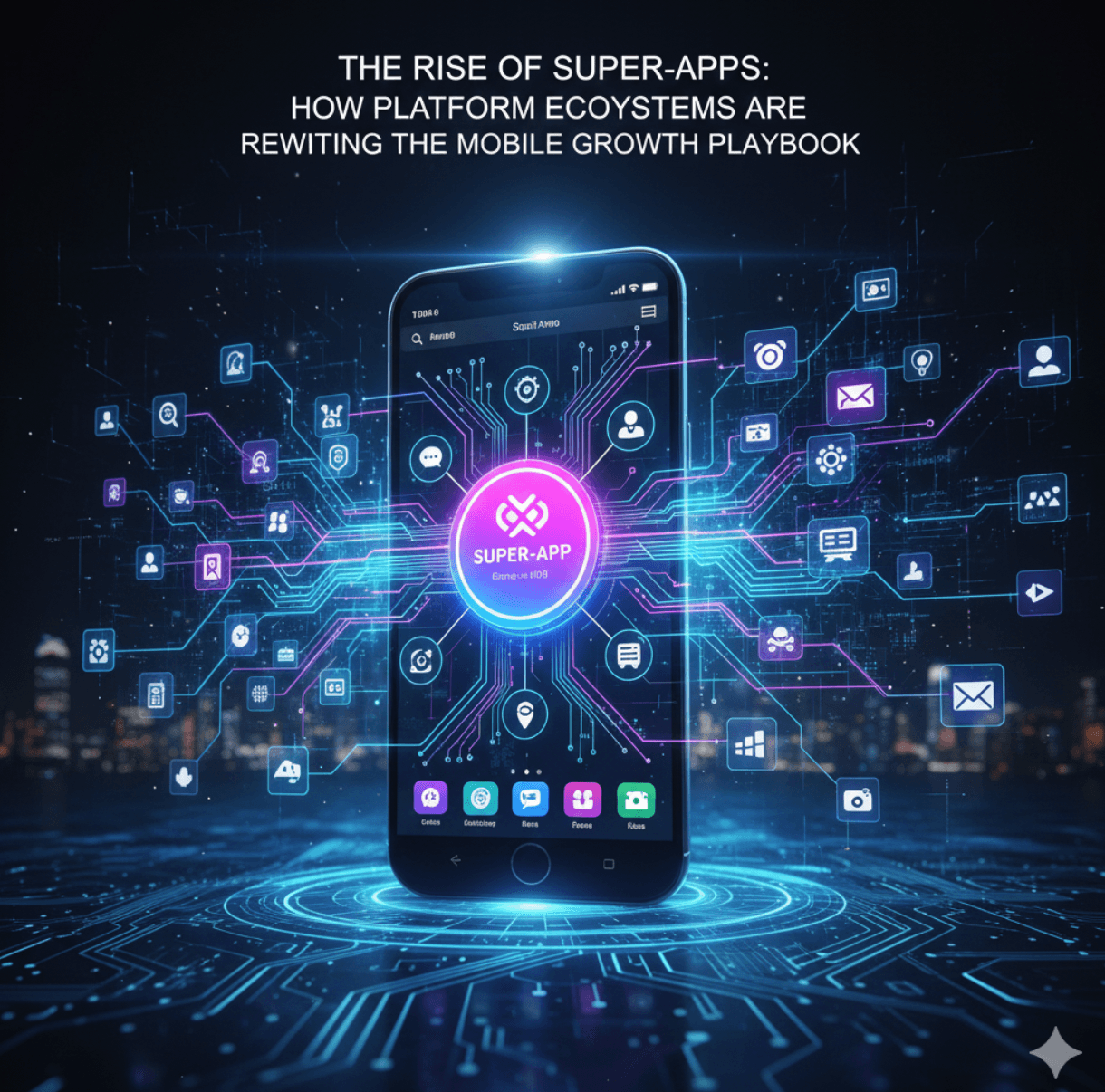
The Rise of Super-Apps: How Platform Ecosystems Are Rewriting the Mobile Growth Playbook
The global app economy has entered its “ecosystem era.”
In 2026, mobile growth will no longer revolve around isolated apps competing for installs but around super-apps that merge payments, messaging, commerce, entertainment, and mobility into a single, sticky digital universe.
From Latin America to Southeast Asia and the Middle East, these all-in-one platforms are changing how users live, spend, and stay connected.
The shift is clear: users don’t want more apps — they want more from each app.
★ What Exactly Is a Super-App?
A super-app is a digital ecosystem built into one mobile application where users can chat, shop, pay, travel, invest, and play without ever leaving the interface.
Think of it as a “mobile operating system” for everyday life.
Here’s how it works in the real world:
- WeChat (China): Started as a messenger, now a payments and e-commerce powerhouse with over 1.3 billion users.
- Grab (Southeast Asia): Lets users order food, book rides, send parcels, pay bills, and even invest — all in one app.
- Rappi (LATAM): Evolved from food delivery to a lifestyle hub offering loans, groceries, and event tickets.
- Careem (MENA): Once a ride-hailing app, now connects mobility, delivery, and digital payments under one platform.
Each began with one core service and scaled by layering new, interconnected experiences that feed each other.
That’s the true power of a super-app: networked convenience.
★ Why Super-Apps Are Exploding in Emerging Markets
Markets like LATAM, Southeast Asia (SEA), and MENA are the perfect breeding ground for super-apps — and here’s why:
- Mobile-first users: For millions, the smartphone isn’t their second screen — it’s their only screen.
- Digital payment boom: Fintech innovation, QR codes, and digital wallets are replacing cash.
- Cultural love for convenience: Users prefer one trusted app over juggling ten different ones.
- Platform incentives: Loyalty programs, cashback offers, and bundled subscriptions keep users inside one ecosystem.
These regions aren’t just adopting super-apps — they’re defining how the next billion users will experience the internet.
★ The Super-App Advantage: Ecosystems That Scale Themselves
Super-apps aren’t just mobile apps — they’re growth engines that scale through integration.
For marketers and product owners, this creates a powerful opportunity to partner, plug in, and grow faster than ever before.
Shared Data = Smarter Engagement
Every service within a super-app feeds the same data pool, enabling hyper-personalized offers and smarter audience targeting.
Example: Grab uses machine learning to predict when a food delivery user might also need a ride home or a payment solution.
Cross-Service Retention = Stickier Users
A user who orders lunch may later top up their wallet or stream sports — all within the same app.
Each feature reinforces the other, creating a self-sustaining retention loop.
Partnership Ecosystems = Instant Scale
Smaller apps can integrate into super-apps instead of competing with them — accessing millions of active users instantly.
Example: In LATAM, fintech startups integrate directly into RappiPay without building distribution from scratch.
★ What This Means for Mobile Marketers in 2026
The rise of super-apps marks a shift from app installs to app alliances.
To succeed in 2026, brands must collaborate, integrate, and leverage ecosystems rather than compete alone.
Super-App Growth Checklist for 2026
- • Explore integrations with super-apps like Grab, Careem, or Rappi
- • Bundle value with complementary services across ecosystems
- • Adopt event-based measurement beyond installs
- • Embrace API-driven collaboration
- • Leverage OEM channels via device-level partnerships
★ Final Thought
The super-app movement is redefining mobile marketing from user acquisition to lifetime value.
In 2026, success won’t belong to the apps with the biggest ad budgets, but to the ones that build bridges instead of walls.
Super-apps prove users don’t want another download — they want a digital home where everything they need is already waiting.
The future of mobile isn’t about adding more — it’s about connecting better.
Programmatic Meets Performance: The Full-Funnel Marketing Revolution in 2026
The mobile app marketing landscape is evolving faster than ever. In 2026, the era of siloed campaigns — where user acquisition (UA) teams focus only on installs and ROAS, while brand marketing runs separately — is over.
The smartest growth teams are now merging performance marketing with programmatic and branding budgets, creating unified measurement systems that track users from awareness → engagement → retention → monetization. This full-funnel approach ensures every marketing dollar drives both short-term conversions and long-term growth.
★ Why Programmatic and Performance Marketing Are Converging
Traditionally:
- Performance marketing tracked installs, ROAS, and LTV, aiming for direct, measurable ROI.
- Programmatic and branding campaigns focused on reach, visibility, and perception, often harder to quantify in terms of immediate revenue.
The convergence is necessary because users no longer move in a linear funnel. They interact with multiple touchpoints — social media, in-app ads, streaming platforms, CTV, and app stores — before converting.
Example: A user might first watch a branded ad for the fantasy sports app FanFight on YouTube, later click an Instagram ad to install the app, and finally respond to an in-app notification prompting their first deposit. Without connecting brand awareness and performance touchpoints, marketing teams miss the full picture of what drives conversions.
In short: performance and branding are two sides of the same growth coin.
★ Full-Funnel Models: The Key to Smarter UA
Unified measurement allows marketing teams to understand how each channel contributes to real, long-term value.
Media Mix Modeling (MMM)
Apps like FanFight in India or RummyCulture in Southeast Asia are leveraging MMM to attribute conversions accurately across programmatic and performance campaigns. This ensures smarter budget allocation across channels.
Event-Based Metrics Over Installs
Beyond installs, campaigns are measured in:
- FTD (First-Time Deposit)
- ARPU (Average Revenue Per User)
- 7/30/90-day retention
Data Integration Across Media
Combining programmatic, social, CTV, and in-app network data allows teams to see which touchpoints drive installs, deposits, and long-term engagement.
This transforms UA teams from reactive spend optimizers to strategic growth orchestrators.
★ Real-World Examples
Fantasy Sports Apps (FanFight, MPL)
- Brand campaigns on YouTube or CTV build awareness before major cricket or football matches.
- Programmatic retargeting drives installs and first-time deposits.
- Push notifications and in-app offers keep users engaged post-install.
Gaming Apps (Ludo King, MPL)
- Programmatic display ads paired with performance-focused social campaigns drive installs and in-game purchases.
- Machine learning models optimize bids based on predicted LTV and player behavior.
Fintech Apps (PhonePe, Cash App)
- Brand campaigns highlight trust and security.
- Programmatic campaigns drive app installs and wallet top-ups.
- Event-based measurement ensures marketing spend is tied to repeat transactions, not just first-time installs.
★ Takeaways for UA Teams in 2026
To stay ahead, mobile marketers must think broader:
- • Build Full-Funnel Models: Connect brand awareness → installs → in-app events → retention → monetization.
- • Integrate Data Across Channels: Combine programmatic, social, CTV, and in-app network data to see the full impact of every touchpoint.
- • Optimize for Events, Not Just Installs: Focus on FTD, ARPU, and long-term retention.
- • Invest in Programmatic Branding: Awareness campaigns amplify performance campaigns and improve ROAS over time.
- • Leverage Predictive Analytics: Forecast which users are likely to deposit or churn and adjust campaigns in real-time.
★ Final Thought
The future of mobile marketing is full-funnel, unified, and data-driven. Apps that integrate performance and programmatic campaigns, and measure success across brand awareness, installs, and retention, will dominate in 2026 and beyond.
In this new era, the smartest growth teams don’t just chase installs — they orchestrate experiences that turn awareness into engagement and engagement into loyal, high-value users.
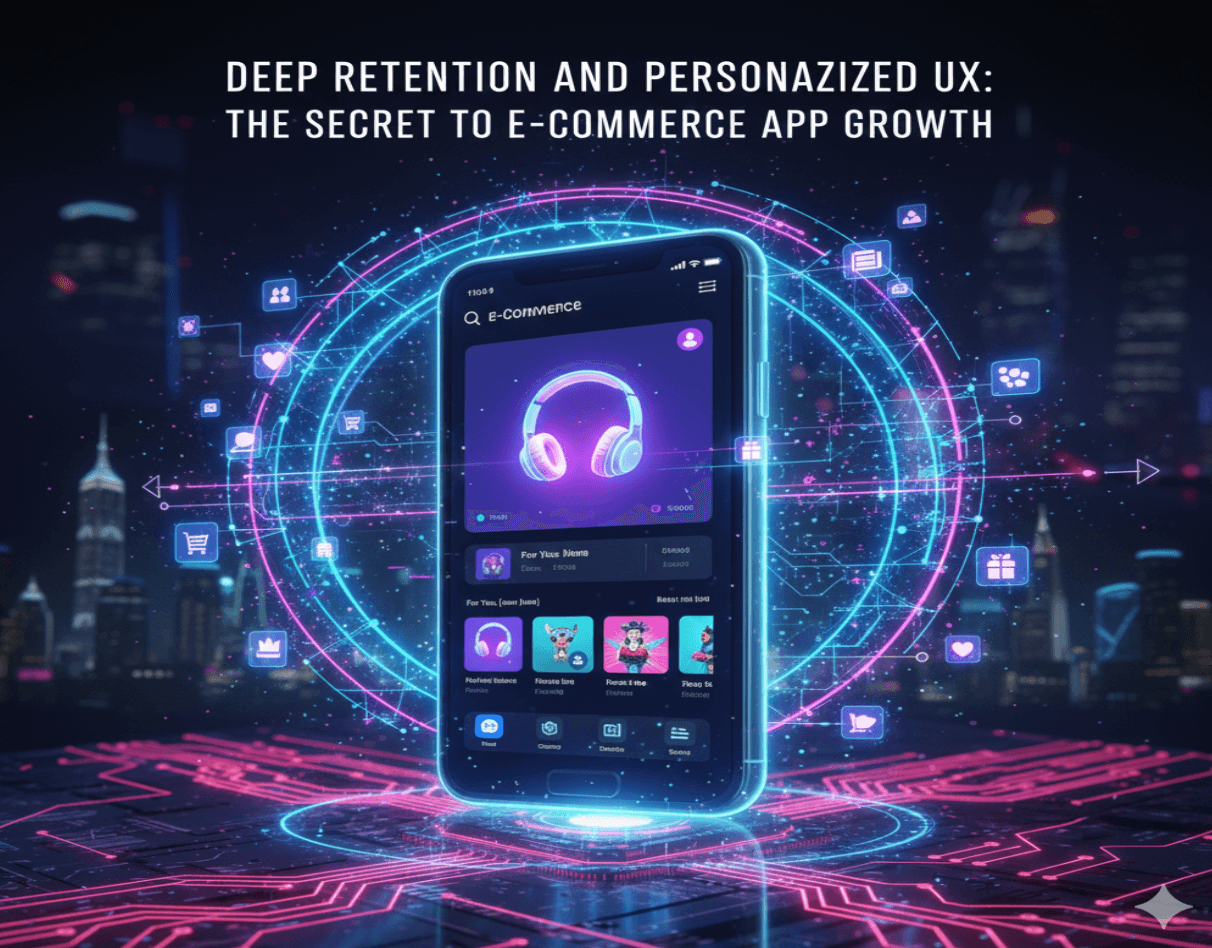
Deep Retention and Personalized UX: The Secret to E-Commerce App Growth
The e-commerce app landscape is more competitive than ever. With mobile commerce dominating user behavior, acquiring users is only half the battle — retaining them is where the real growth and revenue lie. Apps that fail to deliver personalized, seamless experiences risk losing users to competitors who do.
From onboarding to checkout, every touchpoint matters. Apps like Amazon, Flipkart, Myntra, Shopify, Zalando, and ASOS are already setting the bar, proving that retention and UX are as critical as acquisition campaigns.
★ Why Retention Matters More Than Installs
User acquisition campaigns can drive installs, but long-term app success depends on engagement and repeat usage.
- Cost of churn is high: It costs 5–10x more to acquire a new user than to retain an existing one.
- Personalization drives loyalty: Users are more likely to return to an app that understands their preferences.
- Mobile-first behavior: Customers expect instant, intuitive interactions — slow or generic experiences push them to competitors.
For example, Myntra in India and Zalando in Europe leverage personalized feeds, curated recommendations, and push notifications to keep users browsing and purchasing, turning casual app installs into long-term engagement.
★ Personalized UX: The Game-Changer
Personalization goes beyond showing users “popular products.” Today’s top e-commerce apps use data-driven insights to tailor experiences at every stage:
- Onboarding: Apps like Amazon, Flipkart, and ASOS use preference surveys, browsing history, and purchase data to customize home screens and product suggestions.
- Push Notifications & Promo Mechanics: Targeted messages — such as abandoned cart reminders, flash sale alerts, or product recommendations — increase retention and conversions.
- Dynamic Content Feeds: Personalized product feeds help users discover items that match their style, size, or past purchase behavior.
- Fast & Seamless Checkout: Reducing friction in payment flows ensures users don’t abandon carts due to slow loading or complex forms.
The result? Users stay longer, buy more often, and develop loyalty to the app.
★ Combining UA With Retention Strategies
Retention-focused strategies must work hand-in-hand with user acquisition campaigns:
Segmented Push Campaigns
Divide users by behavior, purchase history, or engagement level and send tailored offers. For example, Flipkart sends premium users exclusive early-access sales, while ASOS targets fashion shoppers with seasonal discount alerts.
Onboarding Flows That Educate & Engage
Walk new users through app features, loyalty programs, and personalized recommendations to reduce early churn.
Loyalty Mechanics
Rewards points, cashback, or tiered membership encourage repeat purchases. Amazon Prime’s subscription benefits keep users returning for faster delivery and exclusive deals.
Behavioral Triggers
Push notifications triggered by in-app activity — like browsing but not purchasing, or seasonal favorites — convert passive users into active buyers.
A/B Testing UX Elements
Testing checkout flow layouts, product page designs, or notification timing helps identify the combination that maximizes retention.
★ Final Thought
Acquiring users is not enough. The e-commerce apps that will dominate are the ones that:
- • Deliver deeply personalized experiences tailored to user behavior.
- • Combine user acquisition with retention strategies seamlessly.
- • Use data-driven insights to optimize onboarding, push campaigns, and checkout flows.
- • Build loyalty programs that keep users coming back.
Apps like Amazon, Flipkart, Myntra, Zalando, and ASOS show that when personalization meets UX excellence, retention skyrockets and lifetime value soars.
The future of mobile commerce belongs to apps that don’t just attract users — they keep them engaged, delighted, and buying again and again.
Trusted by