The Mobile iGaming Revolution: Inside the App-First Future of 2026

The iGaming industry is entering a high-stakes transformation and this time, it’s happening entirely inside the app. As we move into 2026, mobile-first is no longer just a strategy. It's the heartbeat of user acquisition, engagement, and monetization. From AI-driven retention to real-time event optimization, the future of iGaming will belong to those who know how to turn installs into loyal, high-value players.

📱 1. App-First Growth Becomes the New Baseline

Forget the desktop. Forget even the mobile web. In 2026, iGaming brands are being built inside apps where attention, personalization, and data meet. Marketers are prioritizing native ad formats, in-app rewards, and gameplay-driven engagement loops to reduce churn and increase session depth.

Top DSPs are already optimizing for post-install events — not just CPI. Because in iGaming, quality installs matter more than quantity.

“The new gold metric isn’t the install — it’s the repeat deposit.”

🤖 2. AI-Powered Player Journeys

AI is no longer a buzzword; it’s a player whisperer. In 2026, top iGaming apps will use predictive AI to identify player intent, detecting when a user is likely to deposit, churn, or upgrade.

Machine learning models will personalize bonuses, notifications, and in-app offers based on behavior patterns. This means fewer generic messages and more timely, meaningful engagement that keeps players in the game.

🎯 3. Event-Based Optimization is the New Performance Standard

The smartest advertisers are shifting away from broad install targeting toward deep event optimization. Metrics like FTD (First-Time Deposit), ARPU, and retention rate now drive every bid, every creative, every A/B test.

By focusing on event-based costing, iGaming marketers ensure that every dollar spent translates to measurable in-app value — not empty installs.

📺 4. CTV + Mobile Apps: A Full-Funnel Power Duo

2026 will be the year mobile and Connected TV (CTV) join forces. Imagine a user watching a sports match on CTV and within seconds, seeing an in-app offer to place a live bet or claim a free spin on their mobile. That’s cross-device storytelling at its finest.

With CTV’s contextual targeting and mobile’s conversion precision, brands can now build holistic performance funnels that capture intent wherever it happens — on the big screen or in the palm of your hand.

💡 5. OEM Growth & App Store Diversification

As competition in Google Play and the App Store heats up, iGaming advertisers are unlocking new acquisition streams through OEM channels and alternative app stores.

Pre-installs, dynamic placements, and AI-curated recommendations on devices from Samsung, Xiaomi, and Oppo are driving higher-quality, long-term users — often at a lower cost than traditional programmatic channels.

OEM traffic isn’t just an add-on; in 2026, it will become a must-have growth layer for serious app marketers.

🌐 6. Privacy, Compliance & Smart Data

The privacy shift continues to reshape mobile performance. Apple’s ATT and Android’s Privacy Sandbox will push iGaming advertisers toward first-party data strategies — combining CRM, event-level insights, and predictive analytics to maintain scale without losing precision.

The brands that will thrive in 2026 are the ones who treat compliance as a competitive advantage — not a constraint.

🏁 Final Thought

2026 isn’t about being in the right market — it's about being in the right moment. And those moments happen on mobile.

To win in this new era, iGaming marketers must:

  • ✅ Think app-first, not channel-first
  • ✅ Optimize for events — not installs
  • ✅ Blend CTV with in-app engagement
  • ✅ Embrace OEM and alternative app ecosystems
  • ✅ Use AI to understand, not just target players

The next wave of iGaming growth won’t come from the web — it will come from the apps that predict, engage, and retain players at scale.

The future of iGaming isn’t arriving — it's already loading. 2026 is when mobile becomes the only arena that matters.

Featured

The Power of DMP Integration in Programmatic Media Planning Categories

The Power of DMP Integration in Programmatic Media Planning Categories

Programmatic media has transformed the way digital advertising works—enabling brands to connect with their ideal audiences at the right time and place. However, to truly maximize its potential, marketers need more than automation. They need data. That’s where the DMP (Data Management Platform) becomes a game-changer.

In this article, we’ll explore how integrating a DMP strengthens programmatic media strategies by improving targeting accuracy, enabling real-time campaign optimization, and driving stronger app performance and monetization results.

Understanding the Role of a DMP in Programmatic Media

A Data Management Platform (DMP) is a centralized system designed to collect, organize, and activate data from various online and offline sources. In the context of programmatic advertising, it serves as the bridge between user insights and media buying platforms.

It gathers and processes data from:

  • User interactions within apps — such as clicks, sessions, and in-app purchases.
  • Past campaign data to analyze what has been effective and what hasn’t.
  • External or third-party data sources to enrich audience insights and improve targeting.

When paired with programmatic media, a DMP enables brands to deliver hyper-targeted ads based on real-time data, ensuring every impression has purpose and value.

Why Integrating a DMP Is Crucial for Programmatic Success

The integration of a DMP doesn’t just enhance automation — it transforms how marketers plan, execute, and optimize campaigns. Here’s how:

1. Smarter, Personalized Segmentation

With a DMP, advertisers can create detailed audience segments using behavioral, demographic, and engagement data. For instance, if you manage an e-commerce app, you can target users who have browsed products but haven’t made a purchase. A personalized ad reminder or limited-time offer can nudge them toward conversion.

2. Real-Time Campaign Optimization

Programmatic media powered by DMP insights allows marketers to adjust campaigns instantly based on live performance data. If ads perform better during specific times or in particular regions, these insights can be applied immediately — helping brands boost ROI without wasting budget.

3. Reduced Budget Waste

Without a DMP, campaigns risk reaching users outside the target audience — wasting ad spend. By consolidating first-party and third-party data, a DMP ensures campaigns are shown only to users with a high likelihood of engagement or conversion.

4. Data-Driven Planning and Insights

A DMP transforms raw data into actionable intelligence. By uncovering behavioral patterns, it enables brands to predict trends and refine their media strategies. For example, if data reveals that high-value app users engage more during evening hours, marketers can allocate budget strategically during that window.

5. Enhanced Monetization Opportunities

For mobile apps relying on in-app advertising, DMP integration can significantly increase revenue potential. By offering advertisers precise audience targeting, publishers can command higher CPMs and create premium ad experiences. A gaming app, for example, can sell ad placements targeted specifically to active players who frequently make in-app purchases.

How DMP Integration Is Redefining the Mobile Ecosystem

In today’s app economy, where user attention is fleeting and competition is fierce, data-driven decision-making is essential. Integrating a DMP empowers app marketers to:

  • Boost user acquisition (UA): Identify and focus on audiences most likely to convert.
  • Improve retention: Detect patterns in churn and engage users before they drop off.
  • Increase ad revenue: Enable advertisers to reach the right audience with higher efficiency.

A DMP doesn’t just improve campaign performance — it helps brands predict user behavior and deliver personalized experiences at every touchpoint.

Final Thoughts: The Future Is Data-Driven

Integrating a DMP into your programmatic media strategy is no longer optional — it's essential. The precision it brings to targeting, the agility it provides for optimization, and the monetization opportunities it unlocks make it an indispensable tool for marketers, especially in the app-driven digital landscape.

If your goal is to enhance performance, improve ROI, and make smarter marketing decisions, a DMP should be at the core of your programmatic strategy. Embrace the power of data-driven marketing and take your campaigns to the next level.

10rbit Marketing

08th Sep 2025

The Power of DMP Integration in Programmatic Media Planning Categories

The Power of DMP Integration in Programmatic Media Planning Categories

Programmatic media has transformed the way digital advertising works—enabling brands to connect with their ideal audiences at the right time and place. However, to truly maximize its potential, marketers need more than automation. They need data. That’s where the DMP (Data Management Platform) becomes a game-changer.

In this article, we’ll explore how integrating a DMP strengthens programmatic media strategies by improving targeting accuracy, enabling real-time campaign optimization, and driving stronger app performance and monetization results.

Understanding the Role of a DMP in Programmatic Media

A Data Management Platform (DMP) is a centralized system designed to collect, organize, and activate data from various online and offline sources. In the context of programmatic advertising, it serves as the bridge between user insights and media buying platforms.

It gathers and processes data from:

  • User interactions within apps — such as clicks, sessions, and in-app purchases.
  • Past campaign data to analyze what has been effective and what hasn’t.
  • External or third-party data sources to enrich audience insights and improve targeting.

When paired with programmatic media, a DMP enables brands to deliver hyper-targeted ads based on real-time data, ensuring every impression has purpose and value.

Why Integrating a DMP Is Crucial for Programmatic Success

The integration of a DMP doesn’t just enhance automation — it transforms how marketers plan, execute, and optimize campaigns. Here’s how:

1. Smarter, Personalized Segmentation

With a DMP, advertisers can create detailed audience segments using behavioral, demographic, and engagement data. For instance, if you manage an e-commerce app, you can target users who have browsed products but haven’t made a purchase. A personalized ad reminder or limited-time offer can nudge them toward conversion.

2. Real-Time Campaign Optimization

Programmatic media powered by DMP insights allows marketers to adjust campaigns instantly based on live performance data. If ads perform better during specific times or in particular regions, these insights can be applied immediately — helping brands boost ROI without wasting budget.

3. Reduced Budget Waste

Without a DMP, campaigns risk reaching users outside the target audience — wasting ad spend. By consolidating first-party and third-party data, a DMP ensures campaigns are shown only to users with a high likelihood of engagement or conversion.

4. Data-Driven Planning and Insights

A DMP transforms raw data into actionable intelligence. By uncovering behavioral patterns, it enables brands to predict trends and refine their media strategies. For example, if data reveals that high-value app users engage more during evening hours, marketers can allocate budget strategically during that window.

5. Enhanced Monetization Opportunities

For mobile apps relying on in-app advertising, DMP integration can significantly increase revenue potential. By offering advertisers precise audience targeting, publishers can command higher CPMs and create premium ad experiences. A gaming app, for example, can sell ad placements targeted specifically to active players who frequently make in-app purchases.

How DMP Integration Is Redefining the Mobile Ecosystem

In today’s app economy, where user attention is fleeting and competition is fierce, data-driven decision-making is essential. Integrating a DMP empowers app marketers to:

  • Boost user acquisition (UA): Identify and focus on audiences most likely to convert.
  • Improve retention: Detect patterns in churn and engage users before they drop off.
  • Increase ad revenue: Enable advertisers to reach the right audience with higher efficiency.

A DMP doesn’t just improve campaign performance — it helps brands predict user behavior and deliver personalized experiences at every touchpoint.

Final Thoughts: The Future Is Data-Driven

Integrating a DMP into your programmatic media strategy is no longer optional — it's essential. The precision it brings to targeting, the agility it provides for optimization, and the monetization opportunities it unlocks make it an indispensable tool for marketers, especially in the app-driven digital landscape.

If your goal is to enhance performance, improve ROI, and make smarter marketing decisions, a DMP should be at the core of your programmatic strategy. Embrace the power of data-driven marketing and take your campaigns to the next level.

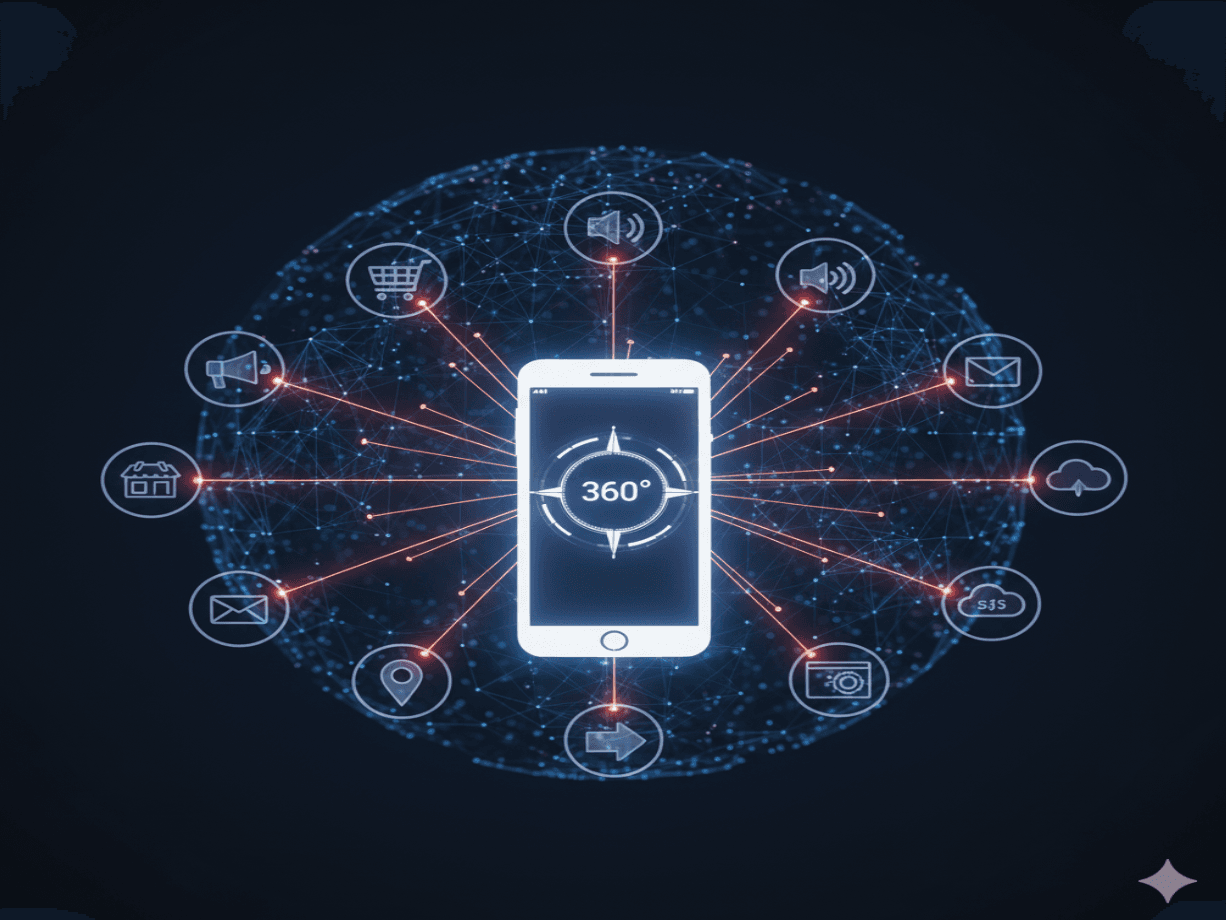
Omnichannel Strategies for Apps: Building a 360° Mobile Marketing Approach

Omnichannel Strategies for Apps: Building a 360° Mobile Marketing Approach

Today’s consumers no longer separate “mobile” from “desktop” or “digital” from “physical.” For them, a brand is a single, unified experience. They might discover a product through an Instagram ad, research it on a laptop, visit a store to try it, and then open an app to finalize the purchase. In short, the traditional, linear customer journey no longer exists.

Yet, for many companies, marketing operations are still fragmented. The mobile marketing team celebrates installs, the CRM team measures open rates, and the web team tracks traffic. The result? A disjointed customer experience and an inflated Customer Acquisition Cost (CAC).

If you’ve already recognized the importance of omnichannel integration and want to synchronize your mobile marketing in a true 360° approach—this guide is for you.

How to Integrate Omnichannel and Mobile Marketing

A successful omnichannel strategy goes far beyond cross-promotion. It’s about integrating data, technology, and strategy to deliver consistent and relevant experiences across every customer touchpoint. Below are three foundational steps for building this bridge.

1. Create a Unified Data Ecosystem

Omnichannel success begins with data integration. Your CRM (e.g., HubSpot, Salesforce), Mobile Measurement Partner (AppsFlyer, Adjust), and e-commerce platforms (Shopify, VTEX) must communicate seamlessly.

When data remains siloed, you’re only executing multichannel marketing—multiple touchpoints without synchronization. True omnichannel marketing, on the other hand, means consolidating these systems into a single source of truth where every user interaction contributes to a holistic understanding of your audience.

2. Position the App as the Central Touchpoint

In an omnichannel ecosystem, your mobile app should be the data and engagement hub. It’s where the richest insights live—behavioral patterns, location data (with consent), engagement history, and transactions.

By positioning the app at the center, marketers can better personalize communication, enrich user profiles, and connect app insights with other channels such as email, web, or paid media.

3. Use Deep Linking for Seamless Experiences

Deep linking is the technology that ties your channels together. It ensures that when a user clicks a product link in an email or social ad, they’re taken directly to the relevant in-app page—rather than a mobile website.

This eliminates friction, creates continuity across channels, and boosts both engagement and conversion rates.

How Omnichannel Marketing Strengthens App Growth

App marketing strategies often focus on driving installs. Omnichannel strategies ensure that once users download your app, they stay engaged and continue converting. Here’s how:

1. Smarter Churn Reduction and Re-engagement

The most common signal of churn is inactivity. In isolated setups, the only reactivation tool is push notifications—often ignored or disabled.

Omnichannel models solve this by connecting engagement data with other channels. For example:

  • After 10 days of inactivity, send a personalized email.
  • Follow it with an SMS offer or a remarketing ad on social media.

This interconnected system keeps your brand visible across channels and boosts user retention.

2. Optimized Customer Acquisition Cost (CAC)

App install campaigns can be costly. Omnichannel marketing reduces CAC by using organic and cost-effective entry points.

Example: A user discovers your content through SEO or social media, joins your newsletter, and only later sees an app download prompt (Web-to-App strategy). By nurturing the relationship first, acquisition costs drop while conversion quality improves.

3. Increased Purchase Frequency and Lifetime Value (LTV)

Omnichannel synergy keeps your brand top of mind. For instance, a user who ignores a push notification might later see a retargeting ad on desktop during work hours. The more touchpoints your brand has across channels, the more opportunities you have to re-engage and increase purchase frequency—ultimately boosting LTV.

Four Omnichannel Strategies for App Marketers

To truly execute a 360° vision, mobile marketing teams should lead initiatives that connect app insights with every other channel. Below are four practical strategies to get started:

1. Smart Banners and Web-to-App Migration

Implement smart banners on your website that recognize whether a user has the app installed.

  • If not installed → CTA: “Download the App” → directs to App Store or Play Store.
  • If installed → CTA: “Open in App” → deep links directly to the viewed product or content.

This frictionless experience not only increases conversions but also strengthens the connection between your web and app audiences.

2. Cross-Platform Cart Recovery

Synchronize shopping carts between web and app platforms using a unified customer ID.

When a logged-in user abandons a cart on desktop, the CRM registers this behavior. Instead of relying solely on email follow-ups, trigger a push notification 30 minutes later (if the user has the app). This approach uses the most immediate and attention-grabbing channel to recover high-intent users.

3. Cross-Channel Reactivation Workflows

Never consider an inactive app user “lost.” Set up automation that identifies users who haven’t opened the app for 30 days.

If push notifications are disabled, the system should automatically trigger other channels—like email campaigns, SMS reminders, or programmatic remarketing ads. This coordinated approach increases the likelihood of reactivation while maintaining a consistent user experience.

4. Intelligent Data Sync and Attribution

Use your MMP or analytics platform to connect attribution data across all channels—mobile, desktop, and in-store. This enables a unified view of customer behavior, helping teams allocate budgets more efficiently and understand which touchpoints truly drive conversions.

Final Thoughts: Building True 360° Mobile Marketing

Executing omnichannel strategies is not just about technology—it’s about alignment. Teams must collaborate around shared KPIs, unified data, and a common understanding of the user journey.

Data fragmentation remains the biggest barrier to achieving a complete 360° view. Overcoming this requires not only the right tech stack but also strategic partnerships that can connect insights, tools, and teams into one cohesive ecosystem.

In an increasingly mobile-first world, your app is the heartbeat of your brand’s omnichannel experience. By building a connected strategy that synchronizes mobile with every other touchpoint, you’ll deliver seamless user experiences, stronger engagement, and higher ROI.

The Great App Rush 2026: How Mobile Market Penetration is Powering the Next Wave of Digital Growth

The Great App Rush 2026: How Mobile Market Penetration is Powering the Next Wave of Digital Growth

The mobile world isn’t expanding — it’s evolving faster than ever. By 2026, global smartphone users are expected to cross 7.8 billion, with app installs skyrocketing across fintech, iGaming, and lifestyle categories. But here’s the truth: while downloads are rising, true penetration — owning a meaningful share of your user’s time and wallet — is what defines success in the next phase of mobile marketing.

📲 2026: The Year of Smart Penetration

The rules of the game have changed. App marketers in 2026 aren’t just measuring downloads — they’re mastering penetration efficiency. That means deeper market intelligence, event-based optimization, and precise user segmentation powered by AI.

Your goal isn’t to reach “everyone.” It’s to convert the right ones, faster. In mature markets like the U.S. and Western Europe, it’s about retention and personalization. In emerging markets like Brazil, India, and MENA — it’s about fast scaling through OEM and CTV integrations.

🔋 OEM Partnerships: The Invisible Growth Engine of 2026

Original Equipment Manufacturers (OEMs) are no longer just phone brands — they’ve become marketing ecosystems. Pre-installed apps, native placements, and first-screen widgets now allow brands to reach users even before they open the Play Store.

Marketers using OEM channels report up to 35% lower CPI and 2x better retention rates compared to traditional paid UA. OEM marketing in 2026 isn’t an alternative channel — it’s the new default growth engine.

📺 CTV + Programmatic: Where Screens Meet Strategy

Connected TV (CTV) is now the bridge between brand awareness and user acquisition. By 2026, over 1 billion users will engage with CTV platforms globally, and programmatic technology will make it possible to retarget those same viewers directly on mobile devices.

Imagine this: a user sees your fintech ad on Roku — and within 24 hours, installs your app after seeing a dynamic offer on Instagram. That’s not a coincidence. That’s cross-device intelligence in motion.

🎮 iGaming, Fintech & E-Commerce: The Penetration Powerhouses of 2026

Some categories aren’t just growing — they’re dominating. In 2026, iGaming, fintech, and ecommerce apps are leading market penetration metrics across multiple geographies.

  • iGaming apps are using real-time behavioral segmentation to identify high-value players.
  • Fintech brands are running AI-powered LTV predictions to refine acquisition spend.
  • Ecommerce apps are leveraging OEM placements and influencer storytelling to convert impulse into action.

These verticals aren’t just acquiring users — they’re creating sticky ecosystems.

🌍 Local Wins Big: The Localization Imperative of 2026

The days of one-size-fits-all campaigns are over. Penetration success in 2026 depends on how well you understand your market. Hyper-local strategies are outperforming generic global ones:

  • In the Middle East, Ramadan-tailored campaigns are driving 45% higher install rates.
  • In LATAM, local humor and celebrity endorsements outperform standard visuals.
  • In India, vernacular creatives are seeing 3x engagement compared to English ads.

Localization isn’t a tactic — it’s the foundation of global scalability.

🤖 Predictive Growth: AI Takes Over in 2026

Artificial intelligence has officially stepped into the driver’s seat. With predictive analytics, marketers can now identify who will install, engage, or churn — before launching a campaign.

Dynamic bidding, value-based pricing, and real-time audience modeling are helping advertisers minimize waste and maximize reach. In short: 2026 is the year of predict-before-you-promote.

💬 Final Takeaway: The 2026 App Growth Mindset

The era of random installs is over. In 2026, mobile market penetration is about influence, intelligence, and integration.

The winners of this new phase won’t be those who shout the loudest — but those who:

  • Build strong OEM & CTV ecosystems
  • Harness predictive data for smarter bidding
  • Localize deeply to connect emotionally
  • And turn downloads into daily habits

Because in the app world of 2026, penetration isn’t about being visible — it’s about being indispensable.

Let's unlock the possibilities of digital advertising